Phase 1 – Discovery (Pass or Fail)
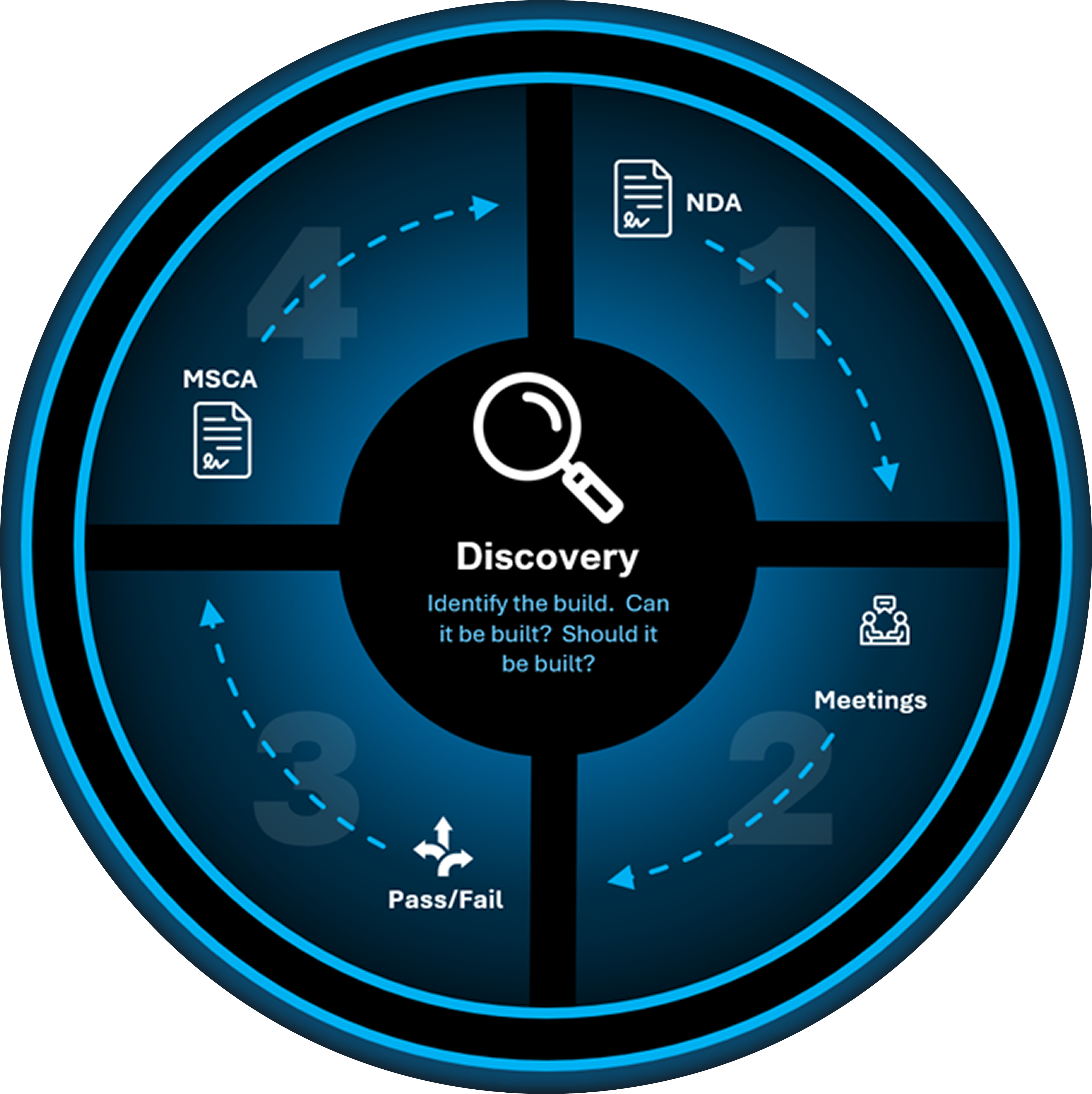
Having a great idea isn't enough — it must be a solution that (a) can be built, (b) have an in-demand consuming audience and (c) must be capable of monetization, whether through revenue generation or cost savings. To ensure these three criteria are met, we take the following steps:
1) NDA: Enter into a mutual Non-Disclosure Agreement.
2) Discovery Meetings: Have one to three discovery meetings to determine whether the project is a good fit, identify project deliverables, what type of human resources are needed, assess whether an AI integration is appropriate, determine patentability, identify who will serve as Project Owner and, in general, determine the project's complexity, viability and costs. Discovery meetings are held online, AI documented and recorded during each call. Copies of both are always available upon request.
3) Pass/Fail Decision: After completing one or more discovery calls, project stakeholders and Data Titan meet to determine whether sufficient project ROI exists to move forward. When deliverables are sufficient, move to Step 4.
4) MSCA: When the parties have agreed to begin a project, key stakeholder(s) and a Data Titan representative will enter into a Master Services Consulting Agreement (MSCA). This process typically requires one or two business days to complete and creates the start of the architectural planning and engineering phase of the project.
Phase 2 - Master Scope Document (MSD)
Creating a Master Scope Document (MSD) produces ever-changing "blueprints" that both lead and chase programming deliverables, depending on the project model, whether waterfall or sprint. The purpose of creating and maintaining an (MSD) is to ensure the right solution is built at the right time, by the right team, as well as create accurate development costs, delivery and release schedules and mitigate feature bloat. Further, and equally important, our MSD process makes knowledge explicit and discoverable and provides that no single individual or group of individuals has siloed information or processes.
Components of a Master Scope Document(s) (MSDs) often include:
2) Discovery Meetings: Have one to three discovery meetings to determine whether the project is a good fit, identify project deliverables, what type of human resources are needed, assess whether an AI integration is appropriate, determine patentability, identify who will serve as Project Owner and, in general, determine the project's complexity, viability and costs. Discovery meetings are held online, AI documented and recorded during each call. Copies of both are always available upon request.
1) Accounting
a) Accounting requirements, AR/AP, third-party API integrations, etc.
b) IRS Requirements (Federal, State)
c) Local Taxes: State, County, City, Municipal jurisdiction requirements
2) Artificial Intelligence (AI) (When Required)
a) AI R&D, API Integrations
b) LLM frameworks and AI-related Integration Requirements
c) User Test Cases
d) POC (Proof of Concept)
3) Documentation
a) UX/UI Design Schema
b) Logo development & Approval
c) Wireframing (from a few dozen wireframes to hundreds)
4) Database – Engineering
a) Project Architecture
b) Database Architecture
c) Programming & Business Requirements
5) Legal
a) Federal / State Laws including HIPAA, COPPA, PII, CSAM, FTC and CSAE, to name a few.
6) Product Validation
a) User Journeys
b) User Validation
c) MVPs (Minimum Viable Product, both clickable and non-clickable)
d) Prototyping (Typically performed in sprints)
Phase 3 – Development (Programming)
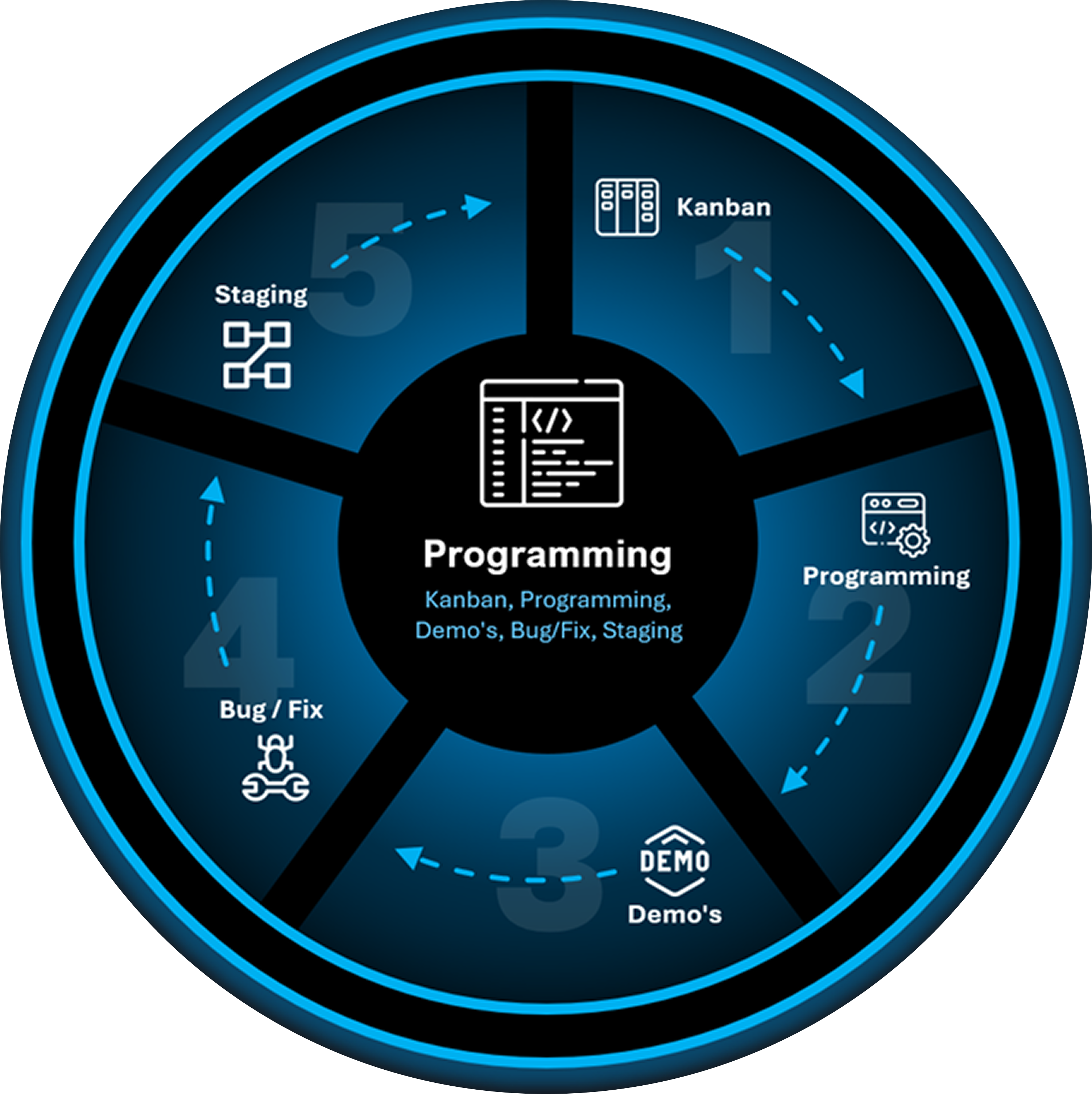
Whether waterfall, sprints or a combination of both, and with the now completed MSD, programming begins. Orientation meetings are held with programming and engineering staff to validate and confirm deliverables, project management coordinates development teams, vacation schedules, holidays, and any other variables that might impact the delivery schedule. Next;
1) Kanban Board Setup: Cases are scheduled and prioritized onto a mutually shared Jira, Trello or Notion kanban board.
2) Programming: Development staff begin programming efforts.
3) Demos: For most projects, delivered code is demoed every 1-3 weeks, depending on the deliverables, project complexity and dependencies.
4) Bug/Fix: Time is provided for developers and/or Quality Assurance (QA) staff to confirm completion of work.
5) Staging: Operating code is moved to "Staging" for the next phase of the project.
Phase 4 – Testing (UAT)
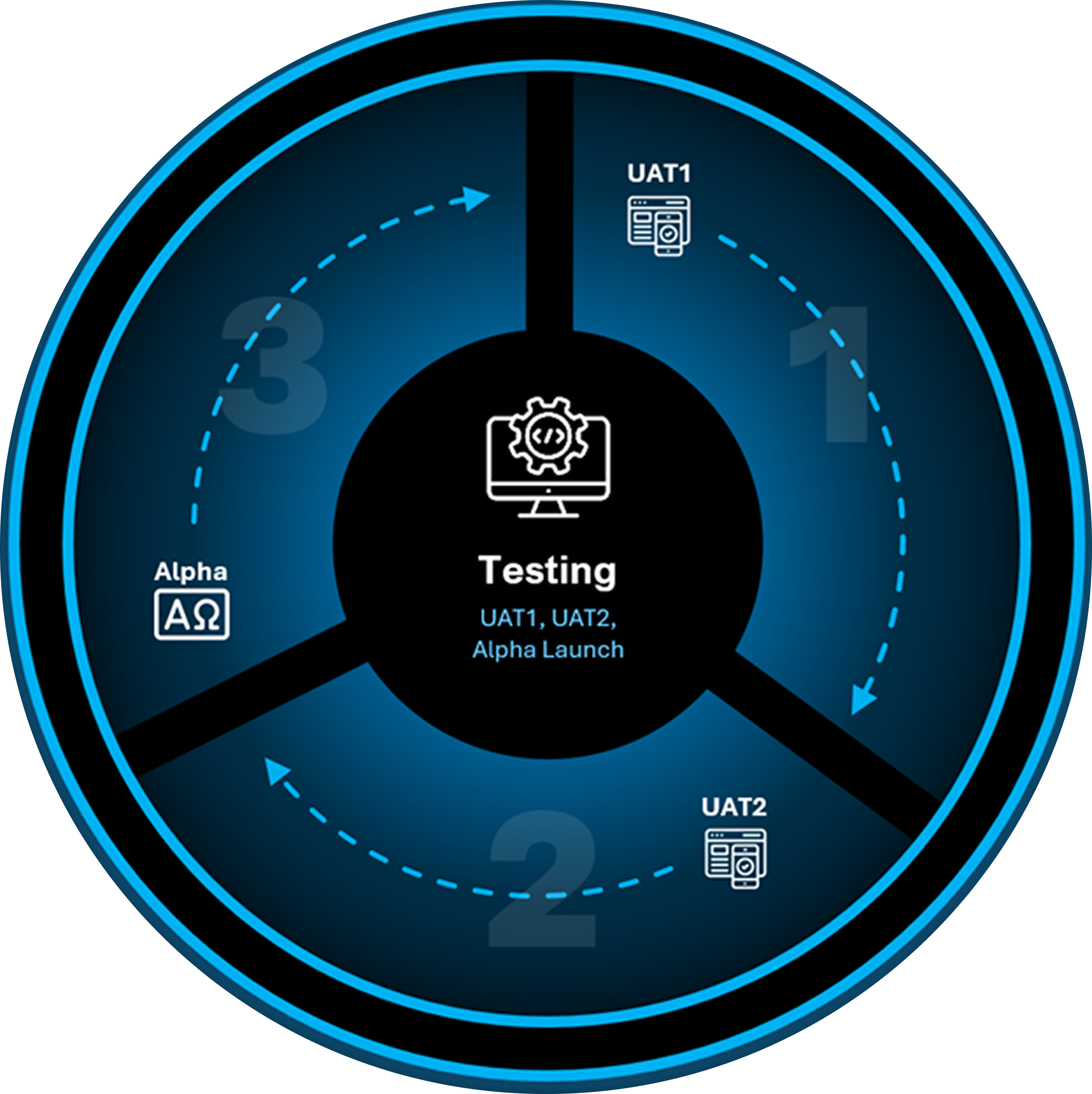
Testing is oftentimes one of the least understood and miscalculated processes associated with software development. At Data Titan, we don't just test functionality for correctness, we perform deep testing by wrongly using the application or mobile apps in ways that people often misuse software, and in so doing, prepare your application’s launch for both experienced and non-experienced users. Next;
1) UAT1: Test Group 1 (both human, scripted and automated) initiates testing which is performed against every module, component and component region to ensure all functionality, algorithms, AI APIs (when appropriate) are thoroughly tested and validated against user stories and deliverables. Bugs are reported, logged, fixed, and retested.
2) UAT2: Test Group 2, typically made up of more experienced users, perform and complete the same testing requirements as Test Group 1, with the same expected outcomes.
3) Alpha/Beta Launch: Once all testing is complete, the application is alpha ready. The Alpha launch, sometimes referred to as the "Soft Launch", pushes the codebase into a production environment where "real" users begin using the platform, whether as customers, management, vendors, employees, or any combination thereof. Beta testing is then performed by additional testers, or some cases, with more advanced automated testing scripts and processes.
Phase 5 – Launch
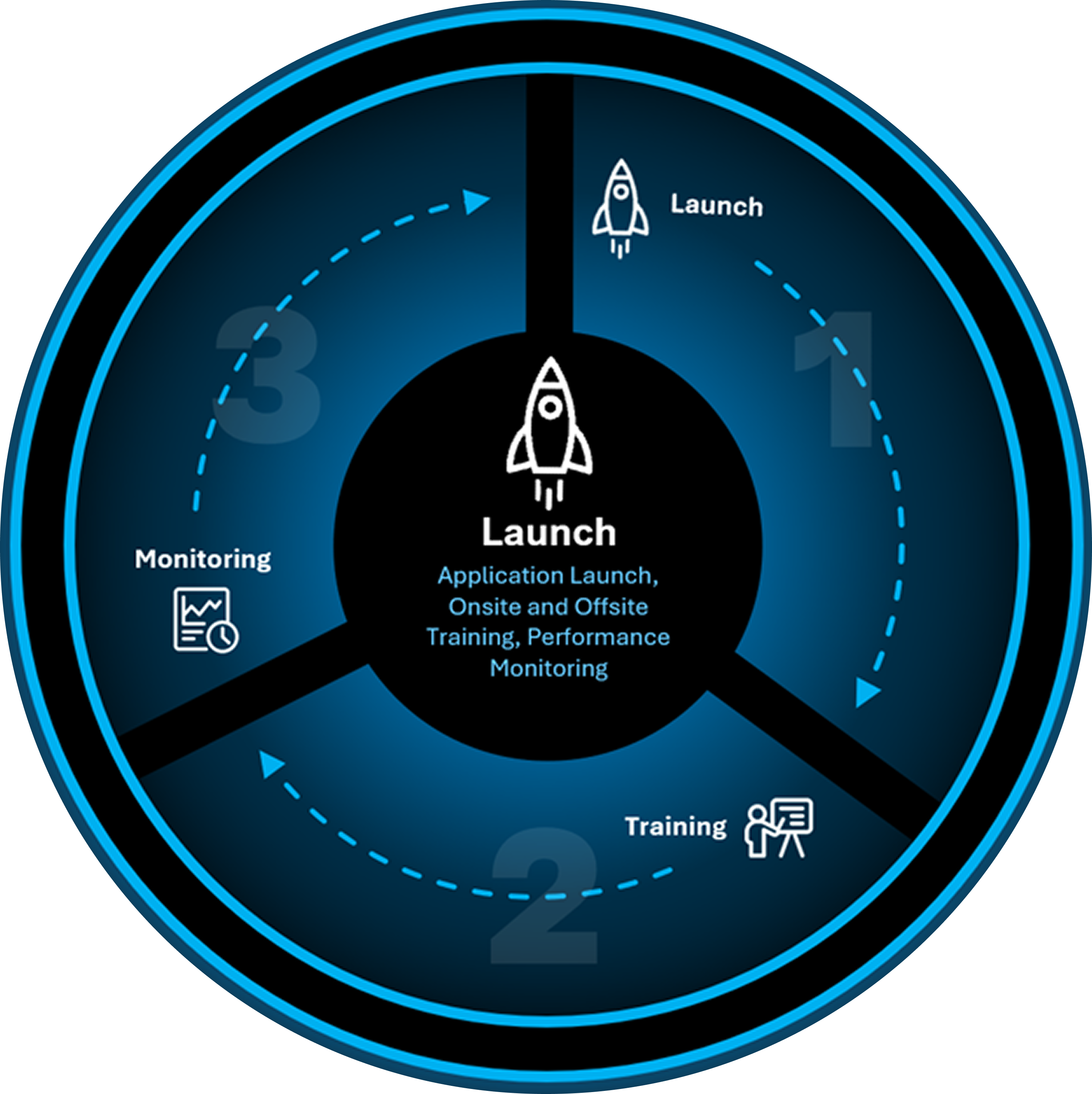
When done properly, launch day is typically one of the quietest. All the deliverables are built. All Alpha and Beta testing work is complete, and stakeholders have signed off on all completed work, and because the staging and production environments are mirrors of one another, transitioning to a live production environment is done in a matter of hours.
1) Launch: Includes deployment to the live environment where users can begin accessing products and services. This process typically includes final configurations, database alignment, and enabling live services to ensure the system operates reliably at scale.
2) Training: Training is delivered through a combination of guided onboarding, documentation (manuals), video tutorials, and live support sessions to ensure all users and stakeholders can effectively adopt and use the system. In limited cases, Data Titan personnel are retained for ongoing training for up to six months post-release.
3) Monitoring: Post-release, monitoring the application includes tracking performance, analytics, error logs, managing hosting thresholds (autoscaling, storage and performance), tracking third-party API and support tool costs, and user activity tracking — without impacting the user experience — to quickly detect and address issues as they arise.
Phase 6 – Stabilization
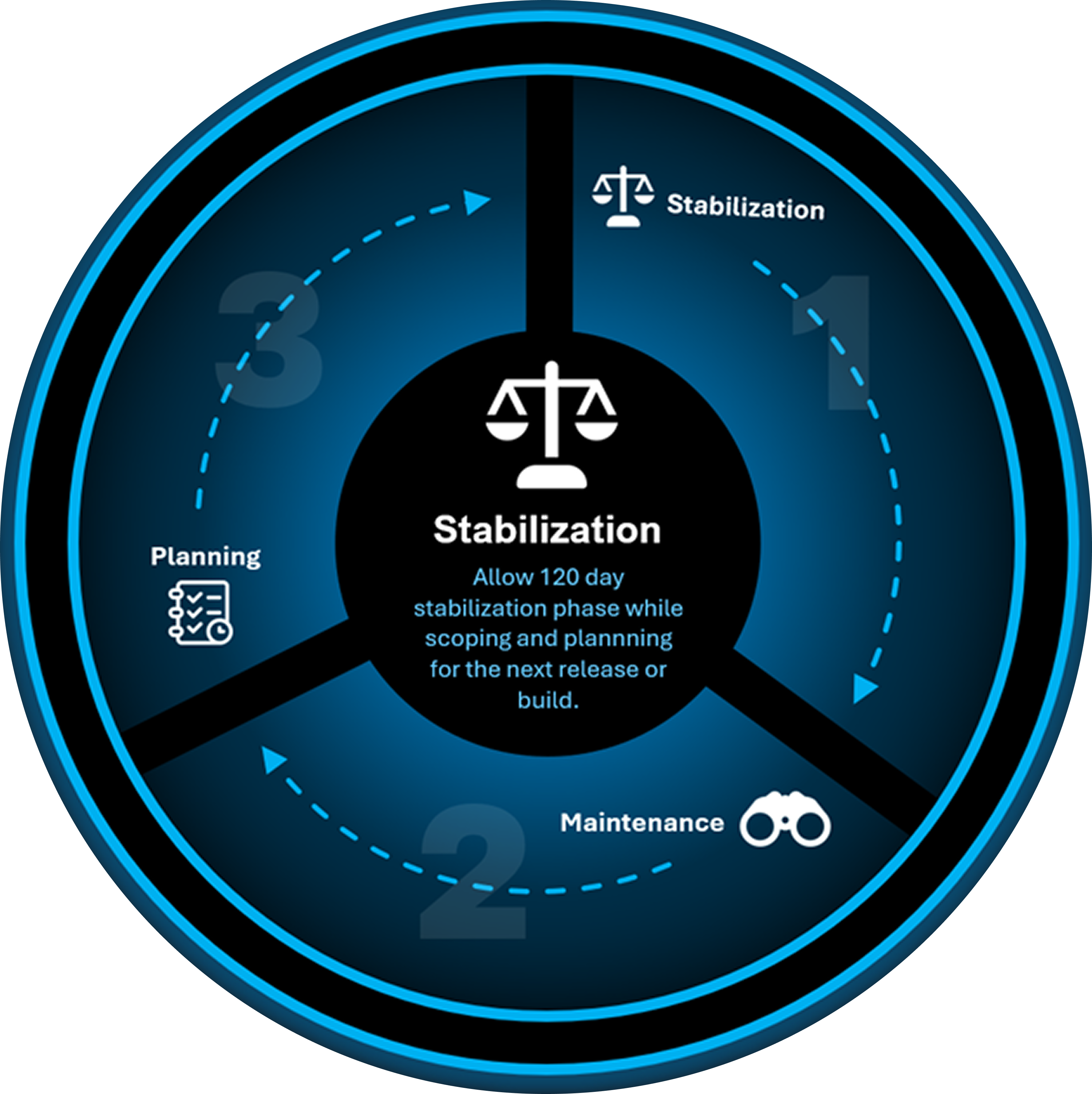
Following launch, the project enters a stabilization period focused on confirming that the application performs reliably in the live production environment. During this phase, Data Titan closely monitors system performance, resolves production issues, reviews user activity and feedback, adjusts infrastructure and configurations, and verifies that third-party integrations, databases, security controls, and operational workflows are functioning as expected. The goal is to establish a stable, dependable foundation before the platform moves into long-term maintenance and future scaling.
1) Stabilization: Includes deployment to the live environment where users can begin accessing products and services. This process typically includes final configurations, database alignment, and enabling live services to ensure the system operates reliably at scale.
2) Maintenance: Ongoing maintenance includes applying security updates, operating system patches, framework and library upgrades, bug fixes, database optimization, and routine infrastructure management. Maintenance helps ensure the application remains secure, stable, compatible with evolving technologies, and capable of supporting future development.
3) Monitoring: Post-release monitoring includes tracking system performance, error logs, infrastructure health, hosting costs, security events, and user activity in the background — without impacting the user experience — to quickly detect, diagnose, and resolve issues as they arise. Continuous monitoring also provides valuable insight into system usage patterns and opportunities for future improvements.
Phase 7 – Scale
With the platform stabilized and operating successfully in production, attention shifts toward measured growth and expansion. Scaling is not simply about adding more users; it involves ensuring that infrastructure, support processes, security controls, operational procedures, and business workflows can accommodate increasing demand while maintaining performance and reliability.
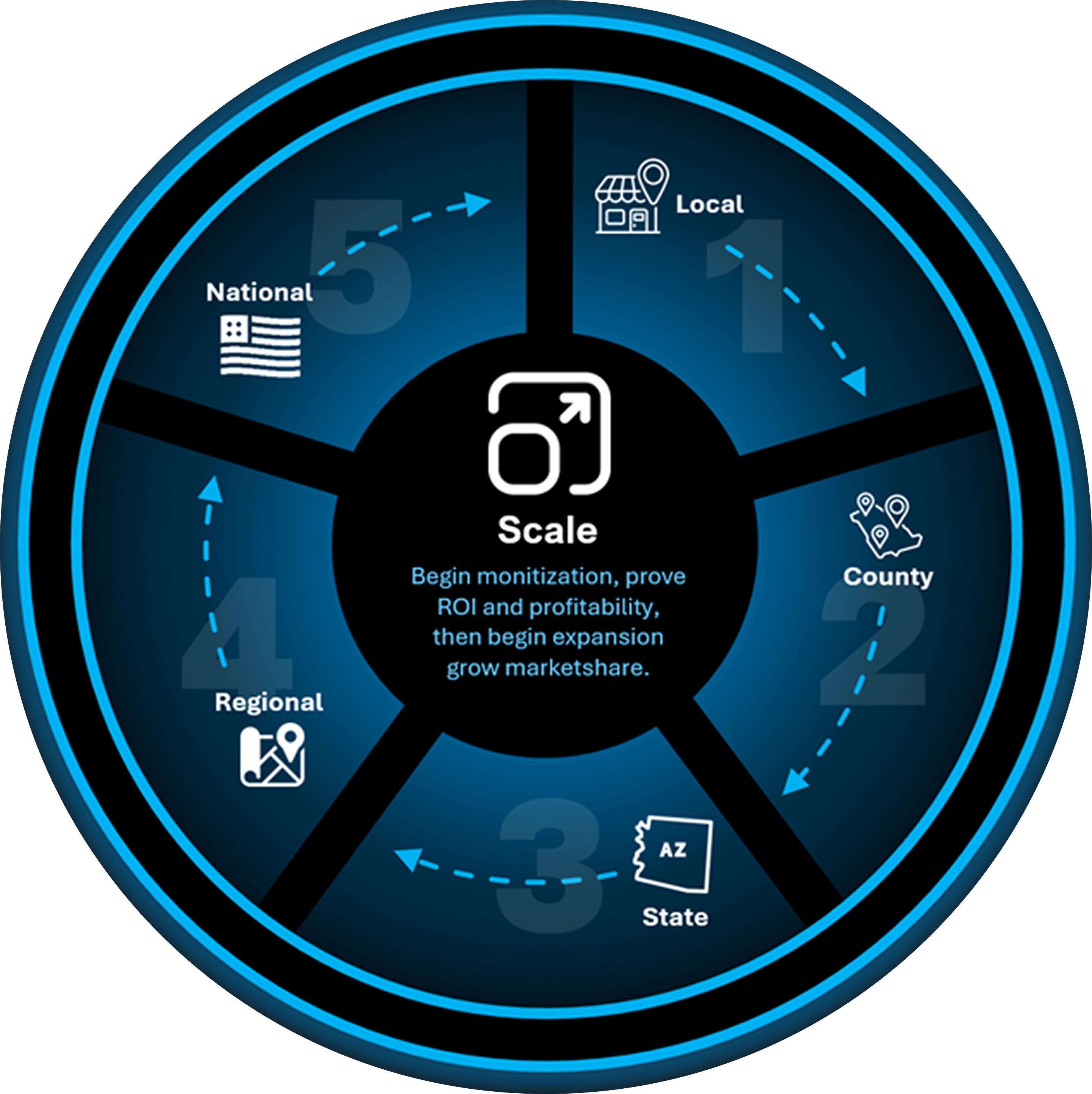
Except in cases involving larger SaaS or national marketplace platforms, especially medical, fintech, B2b and manufacturing, many organizations typically expand in phases, beginning with a local market presence before extending into county, state, regional, and eventually national markets. At each phase, performance metrics, customer feedback, infrastructure utilization, and operational costs should be evaluated to ensure the platform remains stable as adoption increases. Strategic scaling may include additional cloud resources, database optimization, content delivery networks (CDNs), expanded customer support capabilities, enhanced security controls, and the introduction of new features designed to support a larger user base.
Successful scaling transforms a proven application into a sustainable business platform capable of serving larger markets while preserving the quality, reliability, and user experience established during earlier phases of development.
Scale Growth Model
1) Local: Establish market presence and validate business operations within a defined local geographic area.
2) County: Expand service availability to neighboring communities while refining operational processes and customer support procedures.
3) State: Scale infrastructure and business operations to support customers throughout an entire state or jurisdiction.
4) Regional: Extend services across multiple states or territories while implementing advanced operational, compliance, and support capabilities.
5) National: Achieve broad market coverage with enterprise-grade infrastructure, redundancy, monitoring, security, and support systems capable of serving customers nationwide.































.png)